

Memento Mori
Remember, you have to die!

For Rae, for the matcha lemonade conversation yesterday.
What I remember most from the months of my pregnancy with Jack is learning all the ways I would inevitably fail my child. Safety protocols outlined every hazard in my home and outside it, and every parenting book and class was a crash-course in all the ways it would be up to me to protect my kids from a world that was bound and determined to kill them. From the outset, our biological instinct and the messaging we’re delivered is: at all costs, even if it means giving your own life, keep this kid alive.
I did manage to keep my kids alive, right up until Carolyn’s eighth year, at which point a sore knee sent us to the local ER where a doctor working the overnight shift sat down beside me and said she was sending us to the oncology team in the city immediately. An ambulance was on its way.
It went against every instinct in me to entertain the idea that Carolyn might die and there would be nothing I could do to save her. I spent hundreds of nights squashed alongside her in her hospital bed, willing the universe to swap us. Let it be me instead, I begged. But you have to maintain hope— that’s what everyone tells you. Think positive. These kids are fighters, warriors. You have to believe, right up until the last possible moment, that they’ll make it.
Cancer in kids is brutal. It wrecks them physically. Carolyn’s doctor sat me down in the hospital playroom after one particularly messy round of high-dose chemotherapy and pressed a piece of knowledge into me that I have never forgotten: “Some kids die of cancer,” she said, “and some kids die of cancer treatment.” I understood the latter was likely happening to Carolyn. She’d endured the chemo, but with her immune system down, she’d contracted an infection and gone septic.
She lay in bed shivering, her skin grey and her lips pale. I curled around her while she slept, my palm moving soft against her scalp. I whispered over and over, as much to her as to myself: Don’t be afraid. It would not be okay, and so I didn’t say so. But fear, I knew, would serve no purpose here. I took deep, even breaths, trying to create a bubble of calm around her. I could feel us teetering on some kind of cosmic hinge, our whole world riding on a razor’s edge.
Carolyn did not die from cancer or cancer treatment. She recovered from the sepsis, completed 30 months of chemotherapy, and is three years off-treatment with no sign of relapse. But the hyper-awareness of her mortality that her illness infused into my blood has never left. I look at her every single day and am flooded with the knowledge that one day she is going to die.
Courting death has been a longtime habit of mine. I fell into drug addiction as a teen, and until I actually turned 30 I did not think I’d live to see it. Most of my friends hadn’t, and I’m always aware that I’m living for ten or twenty. I have years now that dozens of my friends never got, and I sometimes feel a pressure not to waste them.
My kids, either by genetics or by influence, have followed me down this path of morbid hyper-awareness and curiosity. Their favorite recreational spot is Laurel Hill Cemetery where we attend death planning workshops, historic tours, and outdoor movie nights among the mausoleums. Carolyn and I are devoted patrons of local oddities shops, and we have a shared collection of wet specimens and animal parts— dead things as decoration. Memento mori. We never let each other forget that one day we’re going to die.
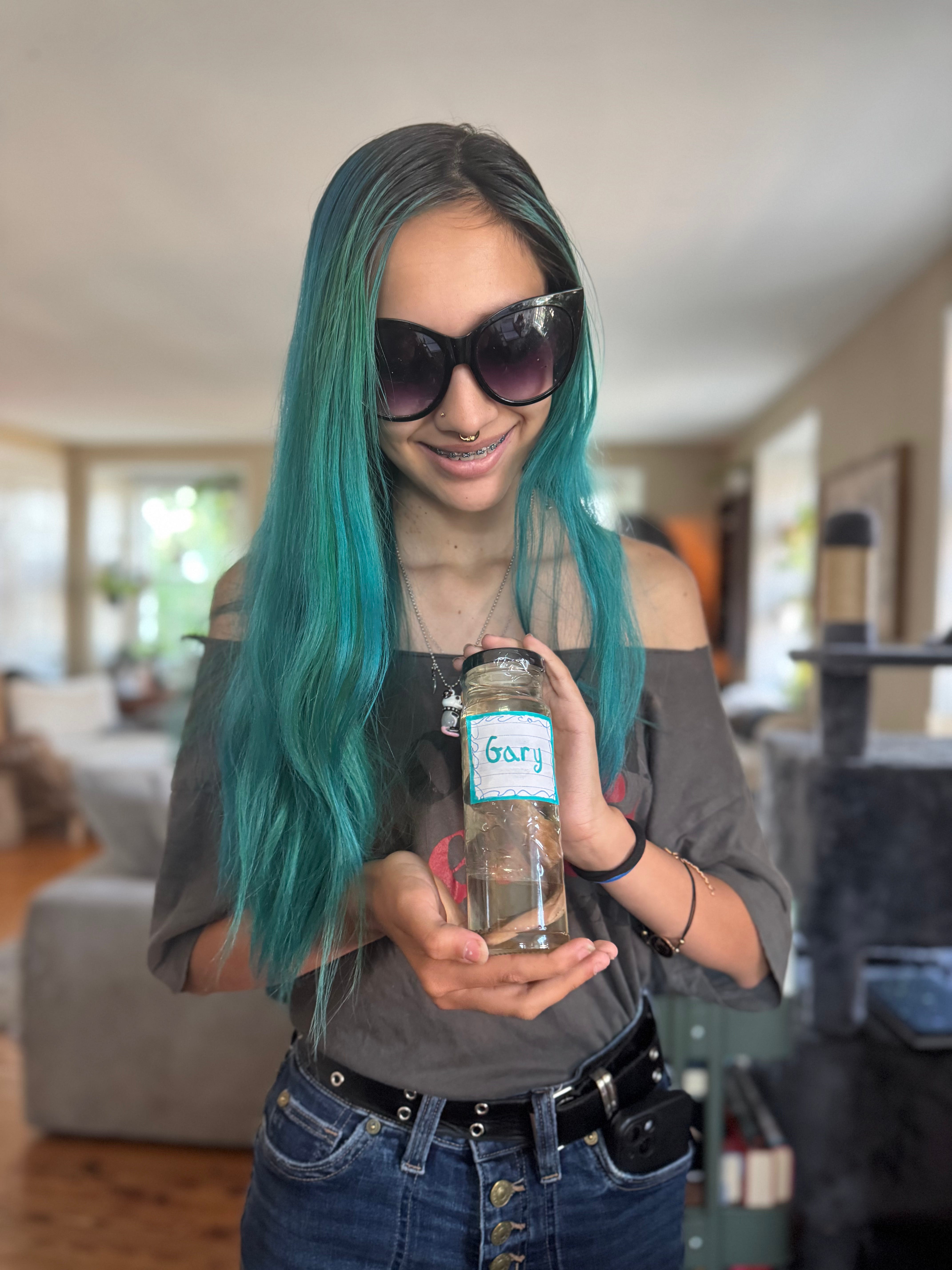
We, as people, generally do not want to think about dying— not our own deaths, and certainly not our children’s. But considering death brings with it a reverence for life that I have not been able to access any other way. When I am consumed by trivial worries— anxieties about missed emails or project deadlines, fears over whether I’ll publish the book I’ve been working on— I can return to that touchstone: memento mori. Remember, you have to die.
Last week I counted the ringlet curls blossoming over Jack’s head, the droplets that caught in them while he bathed the dog in the yard under the big oak tree. The urgency and the fleeting nature of these things is not something I’ve been able to shake, and it snaps the rest of my life into such sharp perspective I often feel like I’m living on another planet. I don’t always find the same urgency in trivialities that other people do, and neither do my children. Carolyn is famous for avoiding drama in school and dipping on group chats. I asked her once if she ever felt like she was missing out by not being a part of her friends’ constant stream of communication. “I do not have time for all those notifications,” she told me, eyebrow poised in an elegant arch.
My kids and I joke about dying a lot. Crossing the street recently, a car didn’t see Carolyn and narrowly avoided hitting her. I wrapped myself around her on instinct, shielding her from the impact, and after some choice words and an aggressive slap to the offending car’s hood, I let her out of my grip. “Welp,” she laughed, “if it’s not cancer, it’s something else!”
This past winter, two years after Carolyn finished treatment, Jack was struggling through a dark period of depression. We sat on the couch one afternoon as he came down from an anxiety attack, his head tipped sideways into my lap. I ran my hands through his thick, dark hair, trying to coax him through the last fumes of his panic.
“I don’t want you to be mad at me,” he said.
I was confused. “I’m not mad at you for feeling anxious,” I started.
“No,” he interrupted. “If I can’t do this anymore. I don’t want you to be mad.”
Oh.
I wanted to bulldoze the entire conversation, along with the possibility it nodded toward. Everything in me screamed to assure him that everything was going to be fine. Instead I forced myself to turn into it— to once again dive into the depths of my fears and face them. Memento mori.
It goes against our nature as parents to consider our children’s mortality beyond the clear and fevered instinct to keep them alive. And yet, staring down the dark tunnel of the possibility of losing each of my children, I found terror, but I also found great beauty. I saw my children in technicolor, could count the individual strands along their lash lines, the cluster of freckles on the side of Carolyn’s neck, the faint, feathery shadow on the top of Jack’s lip. They are most beautiful, our life together most real, in the moments when I do not know how much longer I will have them.
It’s a lot of pressure to live every day like it’s your last, and a glorious privilege to waste time, to slip into ignorance of your own mortality. My awareness of death is webbed through us like fascia— we live beneath the shade of Carolyn’s cancer and Jack’s depression, and we know that every day is not promised. We are all going to die: you, me, my children, your children. No one leaves this world alive. It’s a knowledge my kids and I all share, and a guiding principle of our lives.
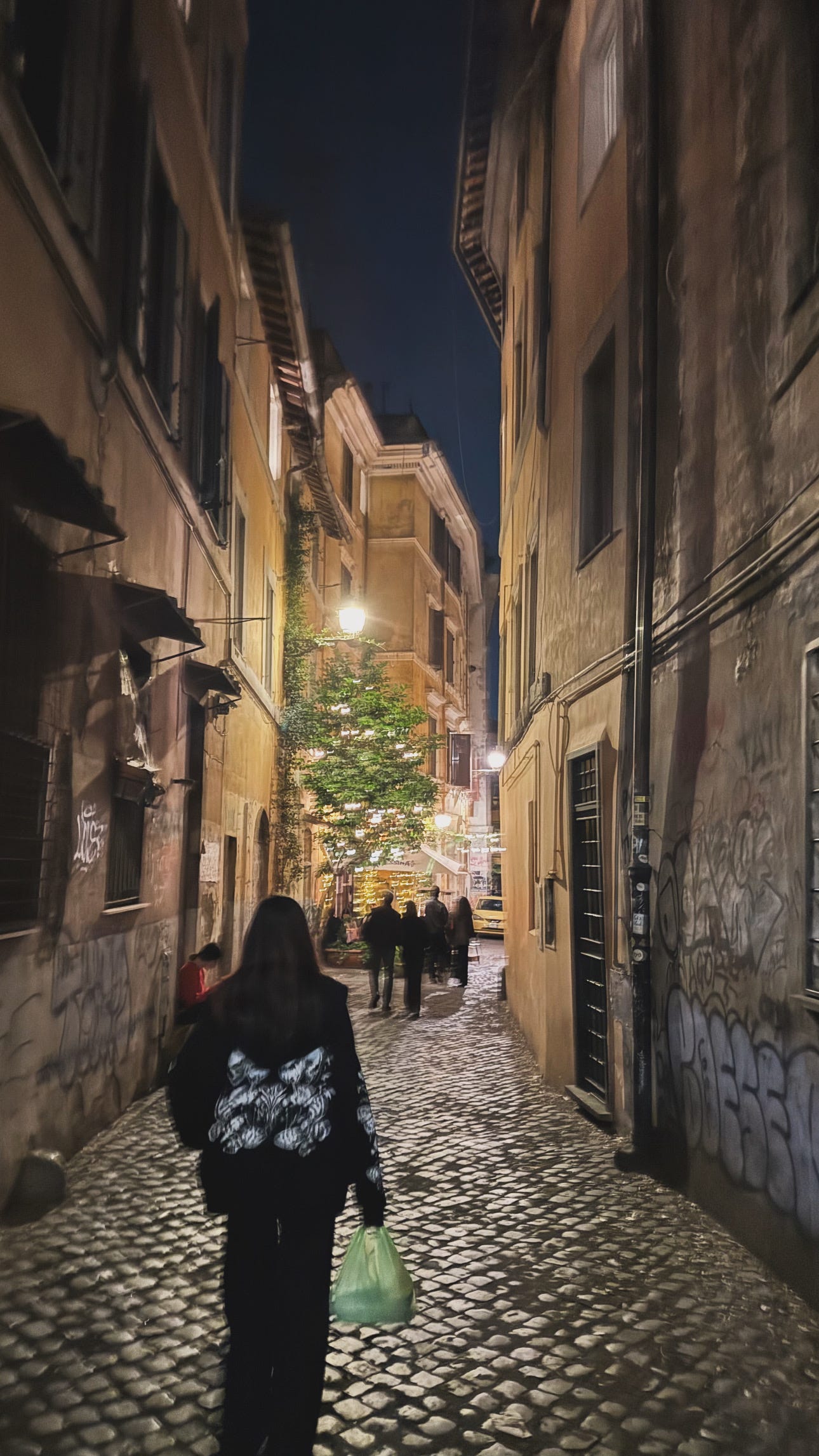
Earlier this year we took a trip to Italy and spent five days in Rome. After dinner one night, walking through Trastevere amidst the noise spilling out from the restaurants, Carolyn grabbed my hand. “It’s going to be over before we know it, huh?” she said. I tilted my head toward her. “The trip?” Jack tugged my other arm, calling over his shoulder with dry exasperation: “our lives, Ma!” They both laughed, then pulled me into the piazza, all three of us lost to the crowd.
*sniff* This is beautiful and so are you and so are J and C (and thanks for the nod) <3
Every time you write, you outdo yourself. Bravo 👏